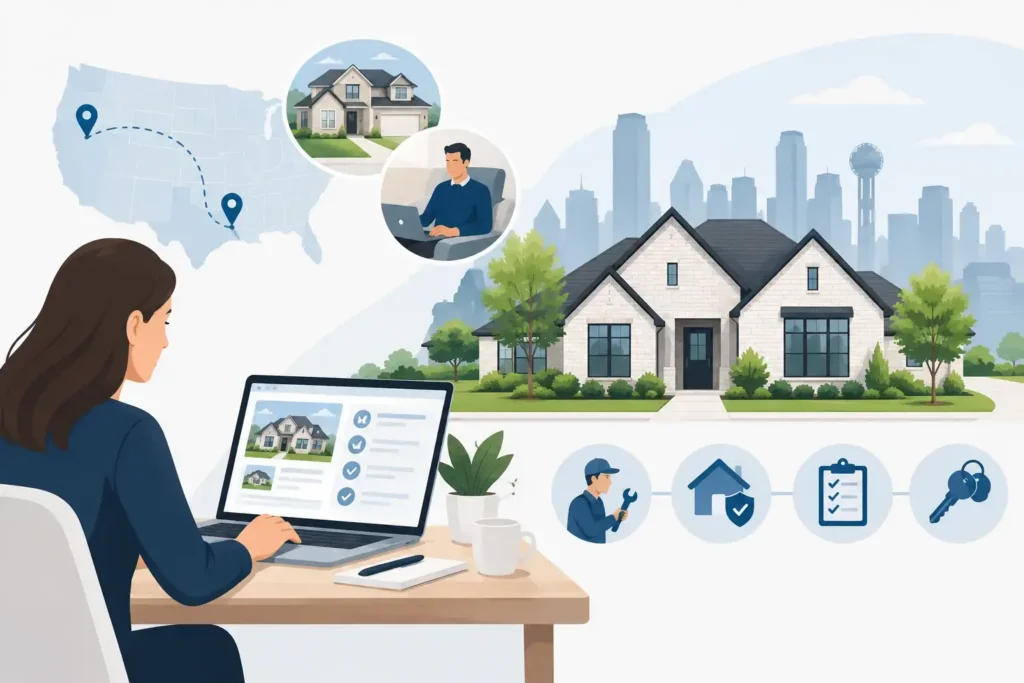
A rental home can be a valuable asset from hundreds of miles away – until the water heater fails on a Saturday, a lease renewal needs attention, or a small repair becomes an expensive surprise. Property management for out of state owners is not simply about having someone collect rent. It is about having reliable local oversight that protects the condition, income potential, and long-term value of the property.
For owners with homes in the Dallas-Fort Worth area, distance makes ordinary landlord responsibilities harder to manage. A dependable local manager provides the systems, communication, and on-the-ground judgment needed to keep ownership practical, even when you live elsewhere.
Why distance changes rental property ownership
Many owners move out of state for work, family, or retirement and choose to keep a former home as a rental. Others purchase DFW investment properties while living in another market. Either way, the property still needs timely attention. Tenants need a clear point of contact, maintenance vendors need access and approval, and the home needs periodic oversight between lease terms.
Trying to manage these needs remotely can work for a short time, especially with a newer property and a cooperative tenant. But it often becomes difficult when multiple issues happen at once. An owner may be comparing vendor estimates from another time zone, trying to coordinate access, or relying on photos without knowing whether a repair is actually complete.
The challenge is not that every rental will have a major problem. It is that small problems are easier to miss when no one is regularly watching the property. A slow leak, deferred exterior repair, or unclear tenant communication can become more costly when it sits unresolved.
What property management for out-of-state owners should include
A full-service management arrangement should give an owner visibility without requiring them to run the daily operation. The specific scope can vary by company and property, but the core services should support leasing, maintenance, financial oversight, and communication.
Leasing starts with a market-ready home
Vacancy is rarely just a marketing issue. Before a home is advertised, it needs to be assessed for condition, cleanliness, safety concerns, and repairs that could affect applicant interest or lease-up timing. A local property manager can coordinate the turnover process, market the home, handle inquiries, and schedule showings.
Tenant screening and lease administration also matter more from a distance. Consistent screening criteria, clear lease terms, and documented move-in conditions create a stronger foundation for the tenancy. They also help reduce uncertainty if questions arise later about property condition, payment obligations, or responsibilities under the lease.
No screening process can predict every outcome. What it can do is create a disciplined process for evaluating applicants and documenting the tenancy from the beginning.
Maintenance needs both responsiveness and judgment
Remote owners usually want two things that can seem at odds: prompt repairs and sensible spending. Good property management balances both. Residents need a responsive process for reporting maintenance concerns, while owners need clear communication around work that requires approval or may affect the property’s condition and budget.
Proactive maintenance is especially valuable for absentee owners. Seasonal HVAC attention, roof and drainage observations, plumbing checks, and early follow-up on resident-reported concerns can help identify issues before they grow. Preventative work does not eliminate every repair, but it can reduce the chance that an avoidable issue turns into a larger disruption.
A local manager should also verify that work is completed appropriately and keep records of maintenance activity. For an out-of-state owner, that follow-through is often as valuable as arranging the repair itself.
Regular inspections provide real visibility
Photos and maintenance updates are useful, but they are not a substitute for scheduled property oversight. Inspections provide an opportunity to observe the home’s general condition, identify visible maintenance needs, and document concerns while there is time to address them.
The goal is not to disturb residents or inspect excessively. It is to maintain a reasonable process that supports the property, the lease, and clear communication. Inspection findings can help owners plan for upcoming expenses rather than being caught off guard by issues discovered only after a move-out.
Financial reporting should be easy to follow
Distance can make rental finances feel disconnected from the actual property. Owners should receive organized reporting that shows rent activity, expenses, maintenance charges, and funds distributed. Clear records help owners monitor performance and prepare information for their own accounting or tax professionals.
Transparency matters here. Owners should understand what has been done, what it cost, and what may need attention next. A property manager cannot remove every ownership expense, but clear reporting makes it easier to make informed decisions without chasing down answers.
How to choose a local manager from another state
An out-of-state owner does not need to choose a manager based solely on the lowest fee or the most polished sales presentation. The better question is whether the company has a defined operating process and communicates clearly about how it handles the moments that matter.
Ask how maintenance requests are received and prioritized, how often inspections occur, and when owner approval is required. Find out how the company communicates during vacancy, tenant placement, renewals, late rent, and repair coordination. A straightforward answer is usually more useful than a broad promise of “full service.”
Local market knowledge also has practical value. DFW is a large metroplex with different rental conditions, housing stock, vendor availability, and neighborhood expectations across its communities. A manager who works in the area can provide better operational context than someone trying to manage the home from a distance without local presence.
It is also reasonable to ask who will be your primary contact. Large teams can offer capacity, while smaller teams can offer a more direct relationship. Neither structure is automatically better. What matters is whether responsibilities are clear and whether communication remains consistent when the property needs attention.
Set expectations before the first tenant moves in
The strongest owner-manager relationships start with practical expectations. Before management begins, discuss communication preferences, maintenance approval thresholds, insurance requirements, owner reserves, and the condition of the property. If the home has aging systems, prior repairs, a pool, or HOA requirements, those details should be documented early.
Owners should also be realistic about decision-making from afar. A manager can coordinate issues and provide information, but urgent repairs may require quick action to protect the property or restore an essential service. Establishing guidelines in advance helps avoid delays when a real problem occurs.
For a homeowner converting a former residence into a rental, this stage is particularly important. The home may have sentimental value, but rental ownership requires decisions based on condition, safety, lease obligations, and reasonable operating costs. A professional manager can help organize the transition without treating the property like just another address.
The value is peace of mind backed by process
Property management is sometimes described as a convenience. For an out-of-state owner, it is more accurately an operating system for the rental home. Marketing, screening, rent collection, maintenance coordination, inspections, renewals, and reporting all need to work together.
At Direct Realty, that work is grounded in hands-on DFW oversight, proactive maintenance, and transparent communication. The purpose is not to remove an owner’s involvement altogether. It is to remove the daily burden while keeping the owner informed and the property properly cared for.
A rental property should not demand constant attention just because its owner lives elsewhere. With clear expectations, regular oversight, and a local team that handles details responsibly, distance can become a manageable part of ownership rather than a source of ongoing stress.