Managing your own rental property can appear straightforward: find a resident, collect rent, and respond when something breaks.
In practice, rental-property management involves leasing, documentation, communication, maintenance, inspections, accounting, and consistent lease administration. Here are seven common mistakes self-managing landlords should avoid.
1. Using incomplete or outdated lease documents
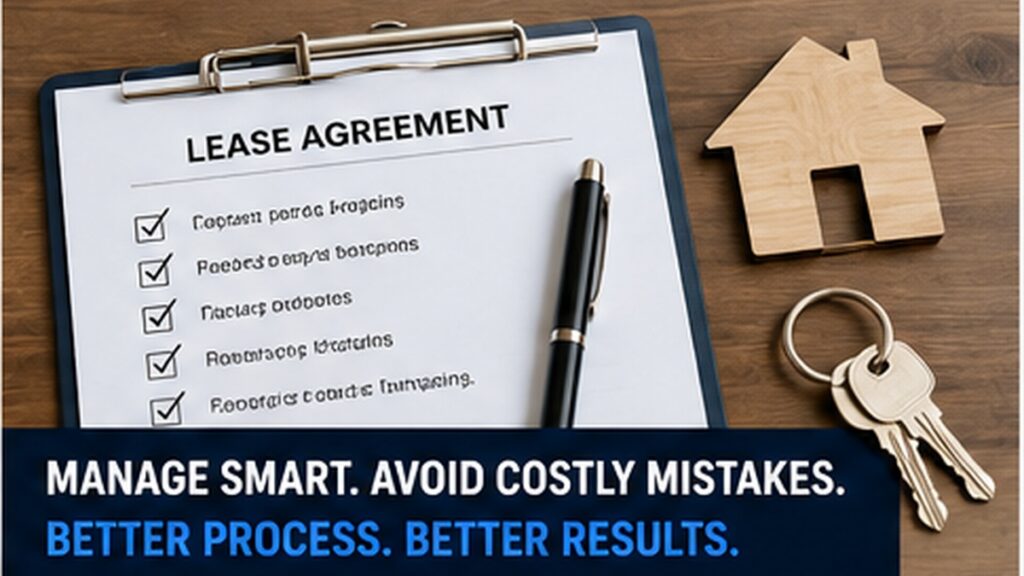
A lease should clearly explain the responsibilities of the owner and resident. Older documents, handwritten changes, inconsistent addenda, or missing signatures can create confusion.
Lease files should be complete, readable, properly signed, and supported by appropriate disclosures and addenda.
2. Failing to document the property’s condition
Without detailed move-in documentation, it can be difficult to determine whether damage occurred during the tenancy. Owners should maintain move-in condition records, dated photographs, maintenance records, resident communication, vendor invoices, and lease notices.
3. Treating residents differently
Owners may be tempted to make informal exceptions for one resident but not another. Inconsistent procedures can create confusion and unnecessary risk. Rental criteria, payment procedures, maintenance communication, and lease administration should be applied consistently.
4. Delaying maintenance
Small problems often become expensive problems when they are ignored. Examples include minor roof leaks, slow plumbing leaks, damaged fence sections, HVAC drain issues, loose toilets, and gutter or drainage problems.
Prompt communication and repair coordination can help protect the property.
5. Becoming too informal with the resident
A positive owner-resident relationship is helpful, but the relationship should remain professional. Important matters involving rent, repairs, notices, access, and lease concerns should be documented rather than handled only through casual conversations.
6. Allowing rent to fall behind without a process
When rent is late, owners sometimes wait too long because they are uncomfortable addressing the issue. A written and consistently followed rent-collection process helps residents understand due dates, grace periods, late fees, accepted payment methods, required notices, and the consequences of continued nonpayment.
7. Underestimating the time required
Self-management includes much more than collecting rent. An owner may need to handle advertising, showings, applications, screening, lease preparation, inspections, maintenance, vendor scheduling, resident communication, renewals, accounting records, and move-out coordination.
For owners with demanding careers, multiple properties, or homes located far away, these responsibilities can become difficult to manage consistently.
When professional management may make sense
Professional property management may be helpful when the owner lives outside the area, communication is taking too much time, rent collection is inconsistent, the portfolio is growing, lease documentation needs improvement, or the owner wants greater separation from residents.
Read more about support for a self-managing landlord, the process for switching property management companies, and Direct Realty’s owner onboarding process.
Schedule a Property Management Consultation
This article provides general educational information and is not legal advice. Leasing, notices, resident screening, and property-management requirements vary by circumstance. Consult qualified advisers when appropriate.